The name André the Giant immediately conjures images of an inimitable figure: the Eighth Wonder of the World, a wrestling legend whose sheer size was matched only by his charisma. While his turn as Fezzik in The Princess Bride cemented his status as a beloved cinematic icon for many, his on-screen journey began much earlier, with a fascinating array of Andre the Giant's early and lesser-known film appearances that often get overshadowed. These foundational roles, from monstrous creatures to playful cameos, offer a unique window into how André René Roussimoff navigated a world not built for him, subtly laying the groundwork for the gentle giant persona that would eventually captivate millions.
If you thought André's acting career started and ended with "Anybody want a peanut?", prepare to delve into a surprising cinematic history.
At a Glance: André's Unsung Screen Credits
- More Than Just Fezzik: André’s filmography extends far beyond his most famous role, showcasing his evolving presence in front of the camera.
- Early French Roots: His very first known film appearance was in a French martial arts comedy in 1967, predating his major wrestling fame.
- The Go-To Monster: Television was an early proving ground, with roles as Bigfoot/Sasquatch leveraging his imposing stature.
- Silent but Deadly (or Endearing): Many early film roles relied solely on his physical presence, with little to no dialogue, highlighting his ability to convey emotion non-verbally.
- Self-Aware Humor: André often appeared as himself, particularly in comedies, demonstrating a surprising self-deprecating wit.
- A Gentle Giant, Even in Cameos: His warmth and unique charm were evident even in brief, uncredited, or lesser-known roles.
Beyond Fezzik: Unpacking the Myth of André the Giant's Screen Persona
When we think of André the Giant on screen, Fezzik is the immediate, almost unavoidable, association. And for good reason: his portrayal of the loyal, kind-hearted giant in Rob Reiner's beloved The Princess Bride (1987) is iconic. Lines like "I just want you to feel you're doing well. I hate for people to die embarrassed" became instant classics, showcasing a warmth, humor, and depth that transcended his imposing physicality. This role wasn't just a hit; it perfectly encapsulated the public's perception of André as the ultimate gentle giant.
However, to truly appreciate André's cinematic journey, we need to peel back the layers of this universally adored character and understand that his foray into acting began long before he faced off against Westley. These earlier, often uncredited or brief, appearances weren't just stepping stones; they were experiments in how to harness his unique presence, tests of his comedic timing, and explorations of his ability to command the screen without relying on his wrestling persona. They show a man gradually finding his footing in a new medium, learning to project a powerful yet nuanced presence that would eventually make Fezzik so unforgettable.
The Very Beginning: French Cinema and Early Wrestling Cameos
Long before Hollywood beckoned with its fantastical creatures and fairytale giants, André René Roussimoff—still early in his wrestling career, known variously as Géant Ferré or Monster Roussimoff—made his cinematic debut in his native France.
"Casse-tête chinois pour le judoka" (1967): A Blink-and-You'll-Miss-It Debut
André's earliest recorded film appearance was in the French martial arts comedy Casse-tête chinois pour le judoka, released in 1967. In this rather obscure film, he played a wrestler. Details are scarce, and his role was undoubtedly minor, likely little more than a cameo showcasing his then-burgeoning wrestling identity. Imagine the sight: a colossal figure, already towering over everyone, making his first tentative steps into the world of moving pictures.
This role is significant not for its screen time or critical acclaim, but because it marks the very first time André the Giant graced the silver screen. It was a raw, unpolished glimpse of the future legend, before the larger-than-life persona was fully formed, before the global fame, and certainly before anyone envisioned him spouting rhyming couplets about peanuts. It underscores how his physical uniqueness was always a draw, initially for wrestling, then for niche film roles, and eventually, for mainstream stardom.
Sasquatch and Sci-Fi: André's Foray into Television (The 1970s)
While his big-screen debut was modest, André found a more consistent platform to leverage his imposing presence in television throughout the 1970s. These roles often leaned heavily into his size, casting him as creatures of myth and mystery, frequently requiring elaborate makeup and costumes.
"The Six Million Dollar Man" (1976): Becoming Sasquatch
One of André's most notable early television roles came in the iconic sci-fi series The Six Million Dollar Man. In 1976, he appeared in two episodes of the two-part storyline titled "The Secret of Bigfoot," where he portrayed Sasquatch.
This wasn't just any Bigfoot; André's character was revealed to be an extraterrestrial being, blending sci-fi with cryptid lore. For these episodes, André was encased in a meticulously crafted costume and heavy makeup, completely obscuring his identity. It was a physically demanding role, requiring him to move and fight in an unwieldy suit, all while conveying a sense of alien power and intelligence. This early gig was a brilliant example of Hollywood utilizing André's unique physique to bring fantastical characters to life, relying almost entirely on his physical presence and the magic of special effects. He didn't need lines; his sheer scale did all the talking.
"B.J. and the Bear" (1979-1981): André, Unmasked
Moving into the late 1970s and early 1980s, André made guest appearances as himself on the popular action-comedy series B.J. and the Bear. Unlike the Sasquatch role, these appearances allowed audiences to see André the man, rather than just the monster.
These cameos likely capitalized on his growing fame as a professional wrestler, presenting him as the larger-than-life personality fans knew from the ring. Such roles were crucial in bridging the gap between his wrestling persona and his burgeoning acting career, showing that he could command attention simply by being André the Giant. They offered a glimpse of his gentle nature and willingness to engage in lighthearted scenarios, qualities that would later define his most beloved character.
The 1980s: More Than Just Monsters on the Big Screen
The 1980s were a pivotal decade for André. While his wrestling career continued to skyrocket, he also began to take on more significant and varied roles in both television and film, building towards his breakout performance.
"The Greatest American Hero" (1983): A Different Kind of Bigfoot
Just a few years after his Six Million Dollar Man appearance, André returned to the Bigfoot character concept, albeit in a different context, in the 1983 episode "The Beast in the Black" of The Greatest American Hero. This role, again, capitalized on his imposing stature to bring a mythical creature to life.
While similar in concept to his Sasquatch portrayal, each of these TV appearances contributed to his growing comfort in front of the camera and refined Hollywood's understanding of how to best utilize his unique physical gifts. He wasn't just big; he was reliably massive, and producers knew they could count on him to embody larger-than-life figures.
"Conan the Destroyer" (1984): The Imposing Dagoth
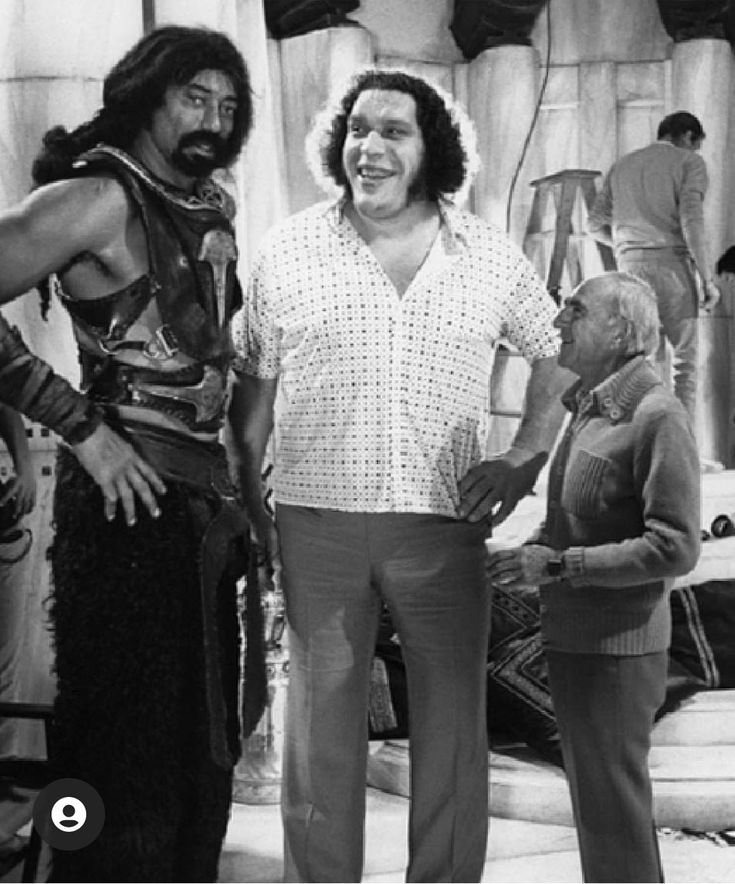
One of André's most significant film roles before The Princess Bride was as Dagoth in the 1984 fantasy epic Conan the Destroyer. This film, starring Arnold Schwarzenegger, saw André once again enveloped in heavy makeup and prosthetics to portray a monstrous, horned deity that Conan battles.
Like his Sasquatch role, Dagoth had no spoken lines. His performance was entirely physical, relying on his formidable size and the intricate costume design to create a truly terrifying antagonist. This role demonstrated André's capacity to embody pure, unadulterated physical menace, a stark contrast to the benevolent characters he'd sometimes play. It solidified his reputation as an actor who could deliver a powerful visual impact, even when dialogue was absent. It's a key role for anyone who wants to Explore Andre the Giant movies and appreciate the breadth of his work.
"Micki & Maude" (1984): A Glimpse of the Man Himself
In the same year as Conan the Destroyer, André made a delightful, self-aware cameo appearance as himself in the Blake Edwards comedy Micki & Maude, starring Dudley Moore. This role was a refreshing departure from his monster portrayals.
Here, André didn't need prosthetics or special effects. He simply showed up as the instantly recognizable André the Giant. These moments, where he played himself or a thinly veiled version of his public persona, were crucial. They allowed his genuine personality—his gentle humor and quiet dignity—to shine through, offering audiences a direct connection to the man behind the myth. These cameos were a subtle nod to his growing mainstream appeal, showing that his star power extended beyond the wrestling ring.
Post-Princess Bride Echoes: Voice Work and Late Appearances
Even after the phenomenal success of The Princess Bride, André continued to take on roles that, while sometimes brief, left a lasting impression, showcasing his versatility even in his later years.
"Mickey and the Beanstalk" (1947/Later Voiceover): A Timeless Voice
This entry on André's filmography is particularly intriguing. While Mickey and the Beanstalk was originally released in 1947 as part of Disney's Fun and Fancy Free, André later provided the voice for the giant character in a re-recording or subsequent release.
This vocal performance adds another dimension to his acting range. It demonstrates that his imposing presence wasn't solely physical; his deep, resonant voice could also convey grandeur and menace, even in an animated context. This role, though a voiceover for a much older film, highlights how his unique characteristics were seen as assets across various forms of entertainment, from live-action monsters to animated fairytale villains.
"Trading Mom" (1994): A Final Circus Act
One of André's final film appearances, released posthumously, was a brief role as a circus giant in the 1994 family comedy Trading Mom. Starring Sissy Spacek, the film featured André in a cameo that, while short, was impactful due to his undeniable presence.
Even in this late role, just before his passing, André's ability to command attention simply by being there was undiminished. It served as a poignant reminder of his unique place in the entertainment world, a figure whose physical grandeur ensured he would always be memorable, even in the briefest of glimpses. This appearance underscored his enduring appeal as a gentle giant, a beloved fixture in the public imagination.
Why These Early Roles Matter: Shaping a Legend
It's easy to dismiss these earlier and lesser-known appearances as mere footnotes in André the Giant's career, overshadowed by his wrestling triumphs and the cultural phenomenon of Fezzik. However, doing so would be a disservice to the subtle yet significant contributions these roles made to his legacy.
These early forays into acting were more than just paychecks; they were crucial steps in André's evolution as a public figure and a performer:
- Building Comfort and Experience: Each role, whether as a French wrestler or a TV monster, helped André become more comfortable in front of the camera. He learned how to hit his marks, how to move under direction, and how to project emotion without necessarily relying on dialogue. This experience was invaluable for his later, more demanding roles.
- Defining His Screen Persona: These varied roles allowed Hollywood to experiment with how to best utilize his unique physique. Was he a terrifying monster? A humorous cameo? A gentle giant? These early roles helped solidify the archetypes he would come to embody.
- Showcasing Versatility (Within Limits): While his range was often dictated by his size, these appearances demonstrated that André could convey menace, mystery, and even self-effacing humor. He wasn't just a wrestler who happened to be big; he was a natural presence on screen.
- Paving the Way for Fezzik: Without the experience gained playing creatures like Sasquatch and Dagoth, or the lightheartedness shown in Micki & Maude, André might not have been as prepared to infuse Fezzik with such a perfect blend of strength, vulnerability, and charm. These roles were his training ground, honing the physical and emotional projection that made Fezzik immortal.
- Expanding His Appeal: Beyond wrestling fans, these film and TV appearances introduced André to a broader audience, laying the groundwork for his widespread recognition. People who might never watch a wrestling match encountered the marvel that was André the Giant through their favorite TV shows and movies.
These "lesser-known" roles are, in essence, the building blocks of a legend. They remind us that even the most iconic figures have humble beginnings, and that every step, no matter how small, contributes to the grand tapestry of their career.
Common Questions About André's Screen Career
Exploring André the Giant's acting career often brings up a few recurring questions. Let's tackle some of the most common ones.
Was André a "Serious" Actor?
André the Giant was primarily a professional wrestler, and his acting career was secondary to that. Most of his roles, especially early on, were chosen to capitalize on his unique physical presence rather than his dramatic acting chops. However, to dismiss him as merely a spectacle would be unfair. He consistently delivered what was asked of him, whether it was physical menace, gentle humor, or a captivating presence. His performance as Fezzik, in particular, demonstrated a surprising depth and comedic timing that surprised many, proving he was capable of more than just monster roles. He might not have been a classically trained actor, but he was undoubtedly a gifted performer.
Did He Want to Act More?
It's difficult to say definitively how much André wanted to pursue acting as a dedicated career path. Given his intense wrestling schedule and numerous health challenges later in life, a full-time acting career might have been impractical. However, he clearly enjoyed many of his roles, particularly those that allowed his personality to shine through. His commitment to The Princess Bride, enduring significant pain during filming, suggests a dedication to the craft and a desire to deliver a memorable performance. It seems he was open to roles that fit his unique profile and schedule, rather than actively pursuing a leading man career.
How Did His Size Impact His Acting Opportunities?
André's gigantism was both his greatest asset and his biggest limitation as an actor. It opened doors to roles that no one else could play (giants, monsters, larger-than-life figures). However, it also constrained him, as he was rarely considered for "regular" human roles. Directors and writers had to specifically tailor parts for him, or cast him in roles where his size was the defining characteristic. This meant his filmography, while impactful, was not extensive compared to career actors, as the perfect roles for him were inherently rare.
Were There Any Lost or Uncredited Appearances?
It's always possible. Given the nature of early television and minor film roles, especially for someone who was primarily known for another profession, some very small or uncredited appearances might have slipped through the cracks of official records. The French film debut, Casse-tête chinois pour le judoka, is a good example of an extremely obscure early credit. However, the ground truth research provided covers the most well-documented and confirmed appearances. It’s a testament to his unique stature that even a brief glimpse of Andre would rarely go unnoticed by fans and archivists.
The Undeniable Legacy: André the Giant, On and Off Screen
André the Giant’s early and lesser-known film appearances offer a fascinating, often overlooked, dimension to the life of a true legend. They reveal a man who, while known globally for his wrestling prowess, possessed a natural charisma and a willingness to step into new arenas, both literal and figurative. From portraying mythical beasts in television thrillers to charming audiences with his self-aware humor in comedies, these roles collectively sculpted the public perception of André, paving the way for his most cherished cinematic moments.
These early performances, though often fleeting or obscured by heavy makeup, are vital pieces of the puzzle that is André René Roussimoff. They showcase his quiet dedication to entertaining, his immense physical presence, and the subtle development of the gentle giant persona that would eventually melt hearts worldwide. So, the next time you recall Fezzik and his iconic lines, remember the journey that led him there – a journey filled with Sasquatches, Dagoths, and uncredited wrestlers, all contributing to the undeniable legacy of André the Giant, on and off the screen.