When we talk about actors who command the screen, it's rarely just about the lines they deliver. It's about the subtle gestures, the vocal nuances, the very way they inhabit a character. For Andre Hyland, a SAG Nominated Comedic actor, this command comes from a meticulous blend of raw instinct, disciplined technique, and an unwavering commitment to his unique comedic point of view. Delving into his acting style and on-screen presence reveals a performer whose work is as intelligent as it is genuinely funny, offering far more than just surface-level laughs.
At a Glance: Understanding Andre Hyland's Craft
- Foundation in Stand-Up: Hyland's stage experience shapes his reactive, in-the-moment screen performances.
- Sincere Comedy: The core of his humor lies in playing both dramatic and comedic beats with genuine sincerity, making the comedy more authentic.
- Physical & Vocal Precision: He leverages subtle body language, facial expressions, and vocal control to convey complex emotions and advance the story, often with understated comedic timing.
- Character-Driven Authenticity: Rather than aiming for laughs directly, Hyland focuses on deeply understanding and embodying his characters' traits and functions.
- DIY Ethos: His career path highlights the importance of creating your own work and collaborating to translate a unique point of view from stage to screen.
- Work Ethic: A strong belief in consistent effort and daily progress underpins his craft, whether in front of the camera or behind it.
The Critic's Lens: Deconstructing Performance
To truly appreciate an actor like Andre Hyland, we need to move beyond simple enjoyment and adopt a critical framework. Film critics analyze acting performance by identifying specific actions and choices an actor makes, evaluating them against the film's narrative purpose. It’s about dissecting what the actor does with their body and voice to convey emotion, advance the plot, and bring a character to vivid life, steering clear of getting lost in plot details or other filmmaking techniques.
This analytical process involves several key steps:
- Observing the Canvas: Describing the actor's inherent physical characteristics – height, body type, age, even their native speaking style and accent – establishes the foundation upon which their performance is built.
- Tracking Transformation: Noting any deliberate changes the actor makes for a role, from weight alterations and hair adjustments to learning new skills, languages, or dialects, highlights their commitment and range. This also includes how they manage age or makeup distortions to serve the character.
- Defining the Style: Identifying the overarching acting style, and any specific skills like singing or dancing if relevant, provides context for their artistic choices.
- Embodying the Character: Briefly outlining the character’s traits, their function within the story, and their relationships with other characters helps us understand how the actor brings that specific persona to life.
- Scene-Level Deep Dive: A detailed analysis of at least one key scene is paramount. This involves explaining the central idea or feeling communicated and precisely what the character does to advance the story within that moment.
- Micro-Analysis of Actions: This is where the true depth emerges. We scrutinize:
- Large physicality: How the actor uses their entire body, including athleticism, stunt work (or lack thereof), and how costuming might expose or distort their form.
- Detailed physicality: Focusing on facial expressions, gestures of upper and lower limbs, poses, postures, stances, the use of props, and sequences of actions.
- Voice: Examining clarity, speech type (language, dialect, accent), and crucial qualities like volume, pitch, tempo/rhythm, intonation, emphasis, and tone.
- Connections: How the actor interacts with other characters and objects, their spatial relationships, prop manipulation, reactions, and the authenticity of their interactions.
- Considering the Edit: Understanding the editing choices (long takes versus numerous short takes) can reveal whether a performance is a sustained, single effort or largely constructed in post-production.
Crucially, good analysis differentiates between describing character actions (e.g., "Karen is flirtatious") and the actor's portrayal (e.g., "Rita Hayworth brilliantly portrays Karen's flirtatiousness by slinking toward Gable, swaying her hips, and licking her lips"). Specific, actionable details like these provide true depth and appreciation for the performance.
Andre Hyland's Blueprint for Comedic Performance
Andre Hyland's approach to acting, particularly in comedy, is deeply informed by his journey from stand-up to narrative screen acting. His philosophy emphasizes authenticity, presence, and a relentless work ethic—principles that serve as the bedrock of his distinct on-screen presence.
From Stand-Up Stage to Screen: The Power of Presence
Hyland credits his stand-up background with instilling vital lessons that directly translate to compelling screen acting. "Stay in the moment, keep going if something goes wrong, be aware and reactive, don't be afraid to try things, and know your point of view," he advises. This ethos of live performance, where immediate audience feedback demands constant adaptation, fuels his dynamic on-screen presence. It means that even in a highly controlled film set, Hyland approaches each take with an improvisational readiness, ensuring his reactions feel spontaneous and genuine.
His career path wasn't a direct route to acting. Filmmaking was his initial passion, with a strong focus on humor. Acting in his own projects emerged out of sheer enjoyment and necessity, demonstrating a hands-on, creator-first mentality that continues to define his work. This background means he understands the entire production process, which invariably informs his choices as an actor.
The Art of Sincere Humor: Balancing Dramatic and Comedic Beats
Perhaps the most insightful aspect of Hyland’s comedic technique is his approach to balancing dramatic and comedic beats. He insists the key is to "play both sincerely." For Hyland, performing comedic moments naturally and seriously, as if the character is completely unaware of the inherent humor in their situation, makes them significantly funnier. This isn't about mugging for the camera or telegraphing a punchline; it's about commitment to the character's reality.
Imagine a scene where a character, played by Hyland, is meticulously preparing a ridiculously elaborate sandwich while discussing a deeply existential crisis. His facial expressions, the careful precision with which he places each ingredient, his intense focus on the task – all would be played with absolute earnestness. The humor doesn't come from him winking at the audience, but from the stark, sincere juxtaposition of his actions and the gravity of his words. This sincerity grounds the comedy, making it relatable and often uncomfortably hilarious. This is a subtle yet powerful technique that differentiates genuine character-driven comedy from mere slapstick.
Deconstructing Hyland's On-Screen Actions: A Closer Look
Applying the critical framework to Hyland's style allows us to appreciate the deliberate choices that shape his performances.
Detailed Physicality: The Subtlety of Andre's Expressions
Andre Hyland often employs a detailed physicality rather than broad, exaggerated movements, especially in his comedic roles. His humor frequently stems from understated facial expressions – a subtle eyebrow raise, a quick dart of the eyes, or a barely perceptible grimace that conveys a world of internal conflict or ironic detachment. His postures might reflect a character's awkwardness, self-importance, or quiet desperation, making them instantly identifiable.
Consider how he might use props: not just as something to hold, but as an extension of his character's internal state. Perhaps a character fidgets compulsively with a pen, revealing anxiety, or carefully positions a coffee cup as a subconscious assertion of control. These aren't random actions; they are precisely chosen to deepen the portrayal. Even if you're exploring the more action-oriented roles of performers like Andre the Giant movies list, you'll find that physicality, whether subtle or overt, is always central to an actor's presence. Hyland’s mastery lies in using these small, precise actions to communicate volumes, often setting up a comedic payoff without ever explicitly aiming for one.
The Nuances of Voice: Tonal Control and Rhythmic Delivery
Hyland's vocal performance is another cornerstone of his style. His clarity of speech is generally excellent, allowing his precise dialogue to land effectively. However, it's his control over speech quality – volume, pitch, tempo, and intonation – that truly shines. He might deliver a line with a slightly elevated pitch to convey nervousness, or a deliberately slow tempo and even tone to heighten the absurdity of a situation.
The emphasis he places on certain words, or the way he might trail off a sentence, can completely alter its meaning, often twisting a seemingly innocuous statement into something profoundly funny or dramatically resonant. This vocal precision is crucial for comedic timing, allowing him to hold a beat, build tension, or surprise the audience with an unexpected inflection. His ability to modulate his voice without it feeling artificial or "acted" is a testament to his sincere approach to performance.
Connections and Reactions: Authentic Interaction
Hyland excels at creating genuine connections with other characters and objects on screen. His reactions are never generic; they are specific to the character's internal logic and emotional state. If a character is annoyed, Hyland doesn't just look annoyed; he might visibly tense his shoulders, let out a slow, controlled breath, and then respond with a measured, slightly passive-aggressive tone.
His spatial relationships with other actors are also carefully considered. He might lean in aggressively to establish dominance, or maintain a hesitant distance to convey discomfort. Interacting with props isn't just a gesture; it's an action imbued with meaning, whether it's the gentle caress of a prized possession or the frustrated toss of a failed project. These authentic interactions make his characters feel real, fostering a connection with the audience that makes both the dramatic and comedic moments land with greater impact.
The Director's Cut: Editing's Influence on Performance
While an actor's individual talent is paramount, it's also true that editing plays a significant role in how a performance is ultimately perceived. Long takes and sustained shots allow the audience to clearly observe the actor's uninterrupted work—their complete physical and vocal arc within a scene. This often highlights a performer's ability to maintain focus and deliver a nuanced, continuous performance.
Conversely, a sequence of numerous short takes can sometimes suggest that a performance is constructed by the editor, piecing together fragments to achieve the desired effect. For an actor like Hyland, whose comedy often relies on subtle, sustained sincerity and precise timing, longer takes would likely serve his style well, allowing his carefully crafted reactions and internal monologues to unfold organically. Understanding this dynamic helps us better appreciate the interplay between actor and filmmaker in shaping the final product.
Andre Hyland's Guidance for Aspiring Performers: Building a Career
Beyond his own performances, Andre Hyland is a valuable resource for aspiring actors and comedians looking to transition their unique point of view from stage to screen. His advice is practical, grounded, and rooted in his own experiences.
The Power of Creation: Making Your Own Work
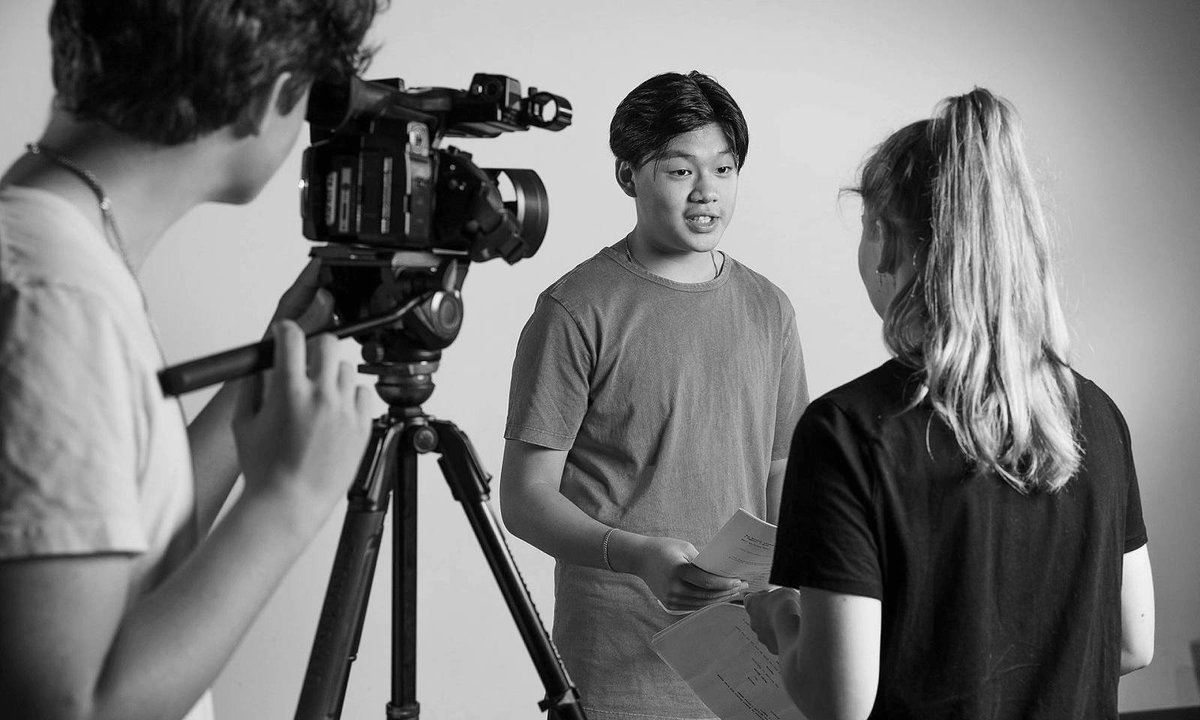
Hyland's foremost tip for comics entering the film world is unequivocal: create your own work. "Produce short films, YouTube videos, or TikToks where you play characters or a version of yourself," he advises. This isn't just about gaining exposure; it's crucial for translating your unique perspective and comedic voice from a live stage, where improvisation and audience interaction rule, to the more rigid structure of narrative fiction and the unforgiving eye of the camera.
This hands-on approach helps you understand how your presence translates on screen, how to hit your marks, how to work with a crew, and how to tell a story visually. It's a direct path to developing a reel that showcases your specific brand of performance, rather than waiting for someone else to cast you in a role that might not fully utilize your talents. Many successful creators have started this way, proving that the most direct route to being seen is often by creating the opportunity yourself.
Collaboration: The Cornerstone of Community and Opportunity
"Make yourself available for other people's projects, big or small," Hyland urges. Collaboration is key. This not only provides invaluable experience in performing for a camera and adapting to different directorial visions, but it also helps you build a robust production community. Relationships forged on set, even on low-budget projects, can lead to future job opportunities and a network of like-minded creatives.
Whether it's an indie short, a web series, or a student film, every collaborative effort is a chance to learn, experiment, and prove your reliability and talent. It's a foundational step in establishing yourself within the industry, opening doors that might remain closed if you try to go it alone. Learning by doing is Hyland's mantra, and active participation in making short films, even with limited resources, can be incredibly impactful. The quality of the storytelling and performance often outweighs the budget.
The Daily Grind: Consistency is Key
Beyond specific techniques, Hyland emphasizes a universal principle for any creative endeavor: start doing what you want to achieve today. He champions the idea of taking at least one step forward daily toward your goal. These consistent, small steps, no matter how minor they seem, accumulate over time into significant progress. This philosophy underscores the hard work, persistence, and continuous self-improvement that define his own career and serve as an inspiring roadmap for others.
The Enduring Impact of Andre Hyland's Presence
Andre Hyland’s acting style and on-screen presence are defined by a deep understanding of comedic craft, honed through years of stand-up and an innate knack for character. His ability to imbue even the most absurd scenarios with genuine sincerity, his precise use of physicality and voice, and his commitment to authentic interaction elevate his performances beyond simple comedic turns. He’s not just delivering jokes; he’s crafting nuanced character studies that reveal the humor in human experience.
For those dissecting film performances or aspiring to create their own, Hyland's approach offers a powerful lesson: whether you're performing in a packed LA venue or navigating the distinct audience preferences of NYC comedy scenes, the most effective and memorable performances come from being truly present, deeply committed, and fearlessly authentic. His work stands as a testament to the power of a unique point of view, meticulously translated from personal vision to compelling screen presence.